
Handmade cardigan in winter: what the mohair blend does (and what it doesn't)
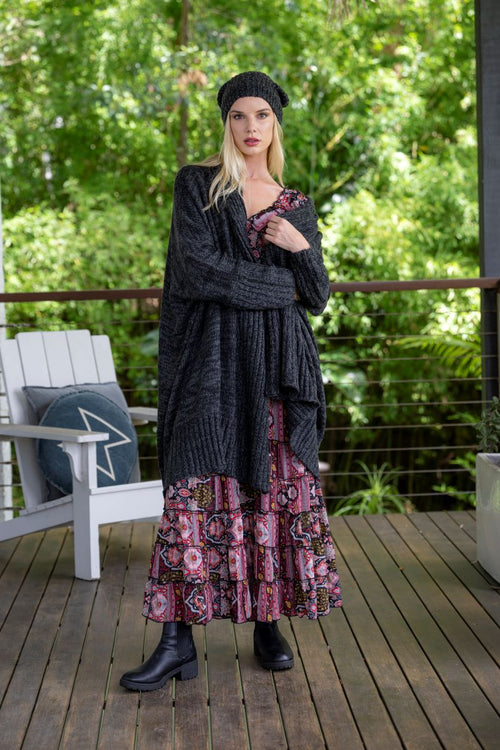
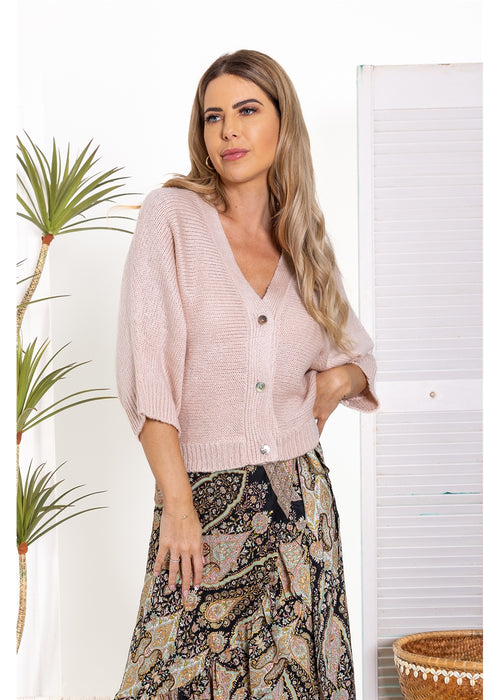
The handmade cardigans at Cienna come from a twenty-year relationship with the same knitters in Indonesian villages. Sarah designs them in Australia; the women who make them have been doing this work since Cienna's beginning. That isn't preamble — it's the single most important thing to understand about what you're looking at, because a handmade knit from a two-decade relationship is a different object from a machine-knit cardigan you'd pick up in a chain store, and the difference shows up in winter in ways that are hard to articulate until you've worn both back to back.
Australian winter is a layering problem more than an insulation problem. June mornings in Sydney hover around 10–12°C. By afternoon you're reconsidering that decision. Brisbane barely registers as cold by most standards. Canberra is its own situation and Canberrans know it. For most east-coast winter days, you need something that handles the morning commute, survives the air-conditioned office, and still looks considered at a restaurant in the evening — not something rated for extended outdoor exposure in actual cold. A handmade mohair-blend cardigan fits this brief well. What follows is an honest account of how.
What the fibre is
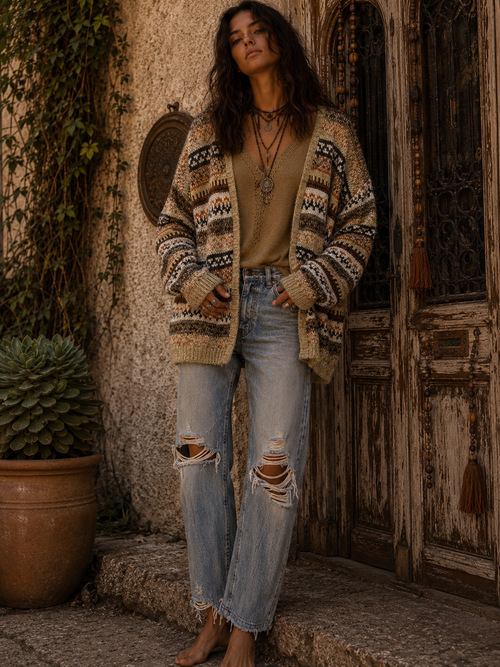
Cienna's handmade knits are a mohair-acrylic blend. Mohair is the fibre from Angora goats — not the same as wool, not synthetic. It's warm, soft, and has a characteristic halo: the fine fibres that catch the light and give handmade knits their depth of texture. The acrylic component in the blend is there for practical reasons — it holds the shape, prevents the felting and shrinking that pure mohair is prone to, and means the cardigan can go through a gentle machine wash without drama.
The result is a piece that is genuinely warm in a way many synthetic "winter knits" are not, without the weight or rigidity of heavy wool. Mohair retains heat without trapping it into an uncomfortable mass; you feel warm wearing it rather than weighted down.
And because it's the blend it is: machine wash, cold cycle, gentle, lay flat to dry. Not complicated. If you've owned handmade pieces that required wool wash and specialist care and instructions that made you nervous about the weather — Cienna's knits don't ask that of you.
The making
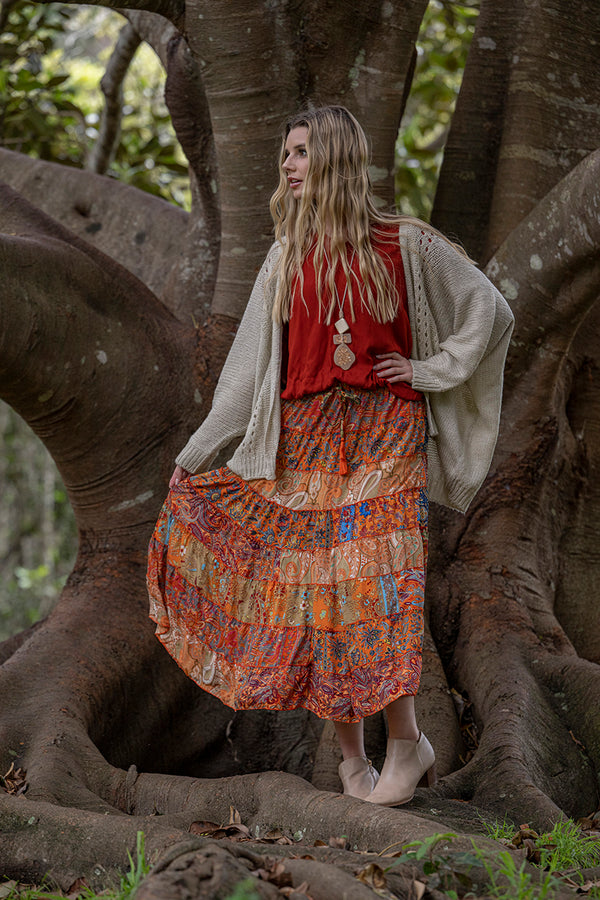
The knitters Cienna works with in Indonesia are in villages, not factories. Small groups of women, the same communities, the same families, for over twenty years. The consistency in what Cienna produces comes from that continuity — makers who've been working with the same designer long enough to understand the brief before it's written. They know how the gauge should sit, what the halo should look like on a finished piece, which colourways from Sarah's seasonal brief will knit up as designed and which will need adjustment.
Each run is seasonal and genuinely small. The production capacity of village knitting is not scalable — it's a defined number of pieces per season, and when those are done, they're done. This is not a strategic scarcity decision; it's the arithmetic of how the work is made. Same families, same hands, same output.
Sarah designs the collections in Australia. Each season brings new colourways, new motifs, a new print story specific to that run. When the stock sells, there's no restock, no second run in a different colourway. The winter 2026 cardigans are the winter 2026 cardigans.
How it performs in an Australian winter
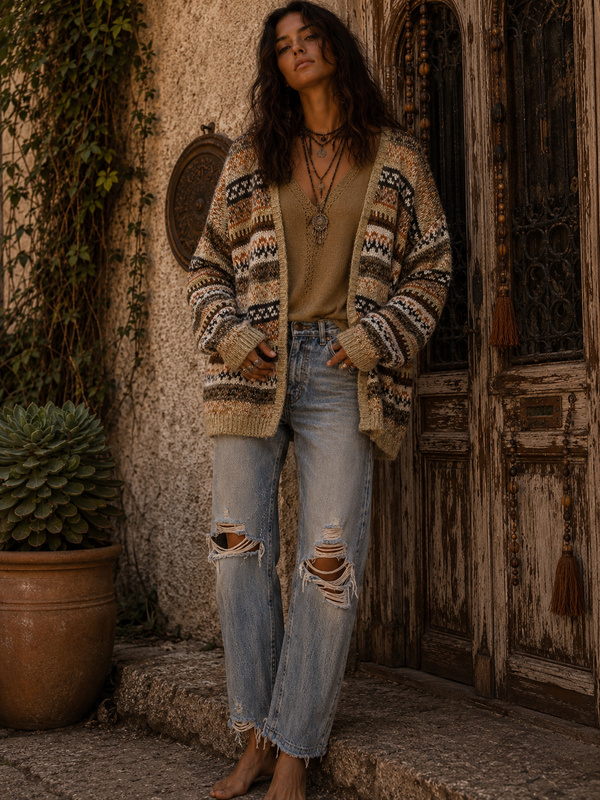
For east-coast Australian conditions — Sydney, Melbourne, Brisbane, and most of the coastal and inland range — a mohair-blend handmade cardigan covers a significant proportion of winter days. The warmth is real and immediate. Put one on and you feel it in the first minute, which is more than you can say for plenty of knits sold as winter layers.
What it isn't rated for: sustained outdoor exposure in genuine cold. Wind chill, persistent winter rain, standing outdoors for extended periods on Melbourne's coldest July days — in those situations, the cardigan is your indoor layer or your middle layer under a coat, not your outer layer. On those days it stays doing the job it was built for: keeping you warm and looking considered while you're inside or transitioning between spaces. For the other five days out of six in an average Australian winter, it's sufficient on its own.
The halo texture also means it photographs well in winter — that quality of light in June and July that makes most dark colours look flat does something different to mohair's surface. Worth knowing if you're wearing it for something that'll be documented.
How to wear it
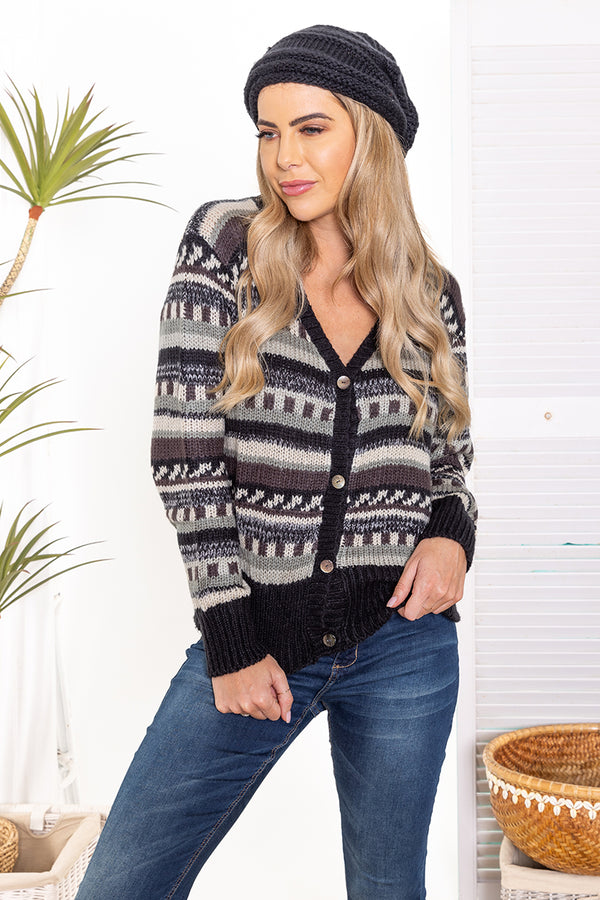
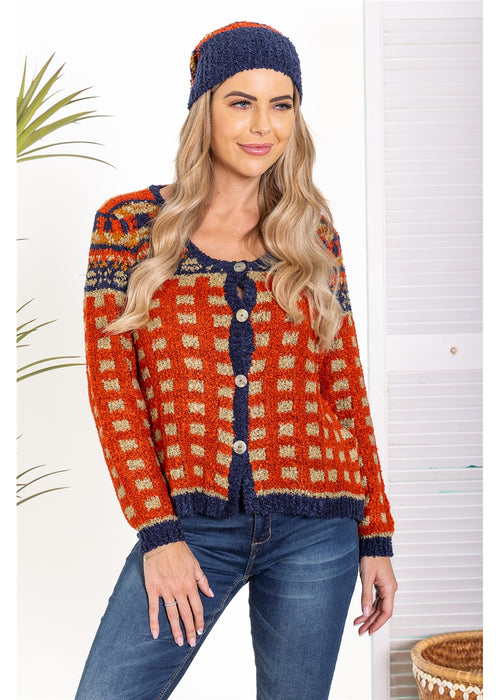
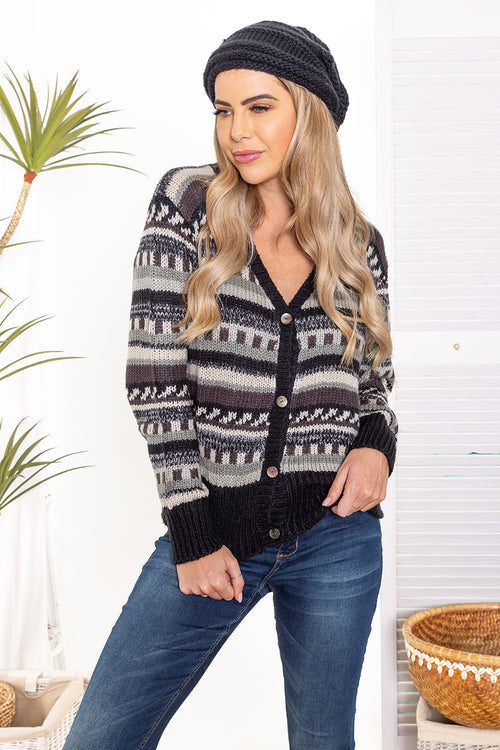
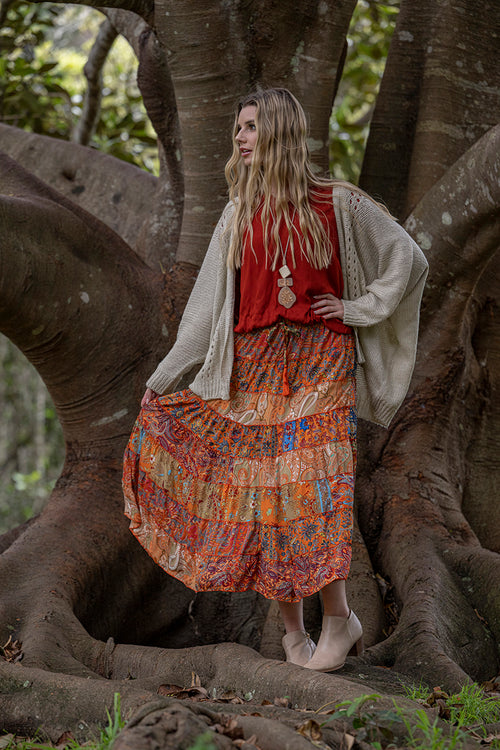
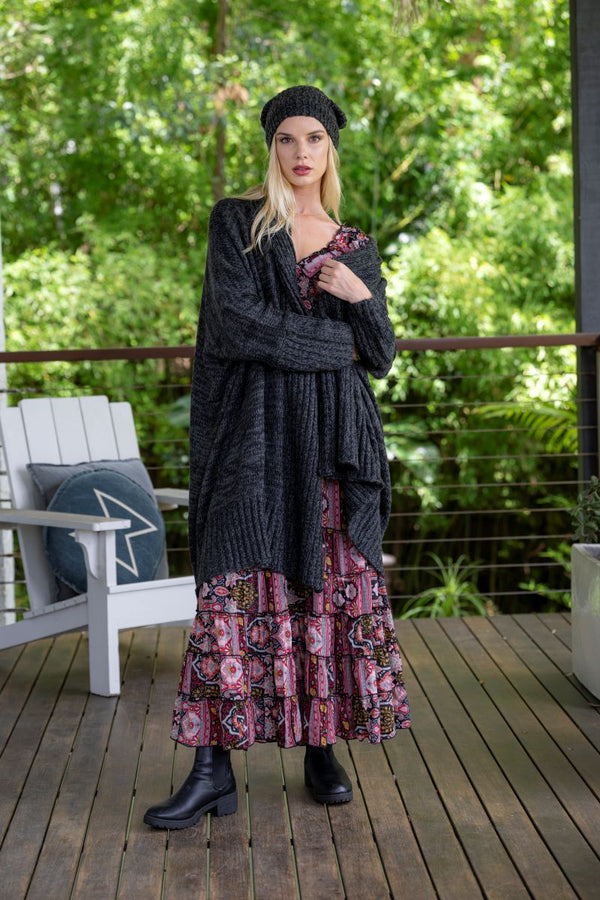
Cienna's cardigans are designed as statements, not background pieces. Each season's colourway and print story is specific — the cardigan is the most interesting thing in the outfit, and the styling decision is largely about not competing with it.
A bold or richly coloured cardigan over a fine, plain long-sleeve top and tailored pants is a complete look. Nothing else is needed to make it work. The mohair handles the visual interest; your base layers handle the warmth and the structure; the whole thing reads as considered without requiring much effort.
A few specific situations where it lands well:
For work: over a fine blouse or long-sleeve with trousers, it replaces a blazer on most indoor winter days. Warm enough to mean it, considered enough for a meeting, easier to move in than a structured jacket.
For evenings out: over a midi dress with sleeves, it covers the shoulder-to-early-evening transition that catches people out in Australian winter. You arrive warm, you can sit outside if the restaurant has outdoor seating and a heater, you leave comfortable.
One practical note with the mohair halo: the first few wears will deposit fine fibres on dark fabrics worn underneath. This is mohair behaving normally — it settles after a couple of washes and doesn't continue. Know this before you wear it for the first time over a navy fitted tee to a dark-coloured couch.
Avoid putting the cardigan over heavy, bulky knitwear underneath. The drape and the halo work because the piece is cut to move over fine base layers — a thick jumper underneath stresses the knit's structure and changes the way it sits. Keep the base fine and let the cardigan carry the weight.
Sizing
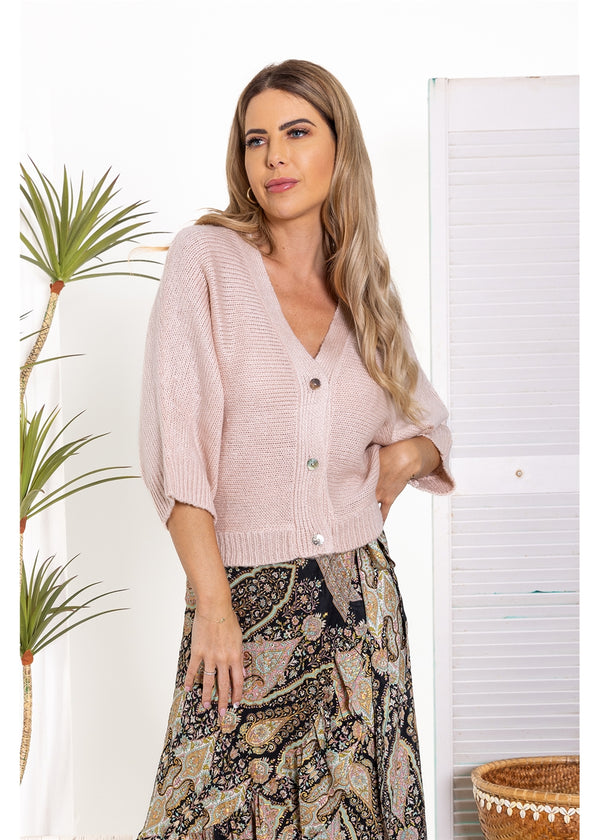
One size, designed to fit from AU 8 through to AU 20. The mohair blend has natural give; the piece is cut as an open-front layer with a generous silhouette that adjusts to what's worn underneath. The handmade nature means there's more inherent stretch and drape than a woven garment, and the open-front construction means the fit never needs to be precise. Put one on and it sits where it's meant to.
What you're deciding
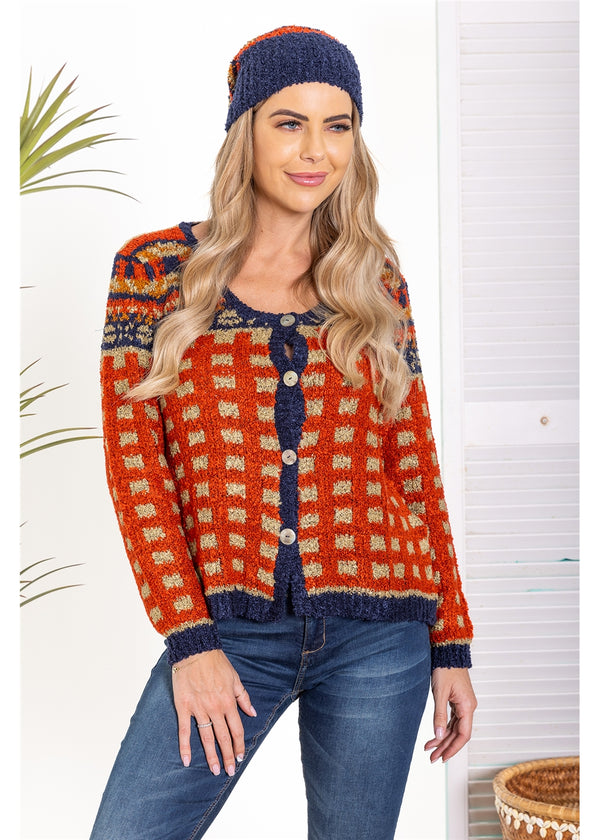
Cienna's handmade knit cardigans sit around $120–$149. That's not a chain-store number, and it's not meant to be — the production model that makes these cardigans what they are doesn't have the volume to price like chain retail. What you're buying is a piece made by hand by women Cienna has been working with for over two decades, in a seasonal run that won't repeat, in colourways that Sarah has designed specifically for this winter.
Whether that's the right calculation for you depends on what you want from a cardigan. If the answer is something warm, original, well-made and unlikely to disintegrate after two winters, it's worth looking at the handmade knits collection before the current run is gone.
For a different layer story — the silk blend pieces follow a similar production logic, made by hand in India by the same family workshops Cienna has worked with since 2006. The kimono jacket collection is worth a look if you're thinking about the months either side of winter, when the temperature asks for something lighter.